
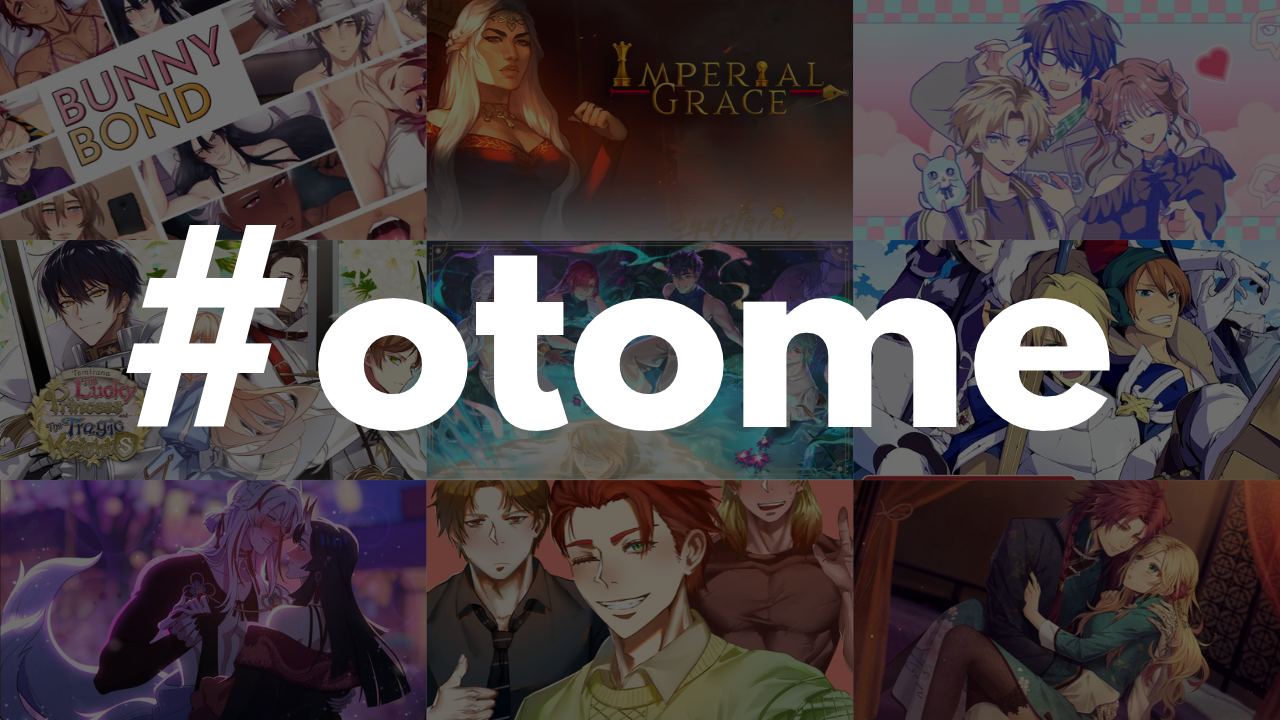
Once again, the otome girlies are embroiled in yet another online discourse. This time, the “discussion” revolves around the use of the otome tag to describe games that would probably be better suited to the broader romance term, amare (or literally anything else). Now, this is not the first or the last time this discussion has reared its ugly head within the community, its something that seems to crop up once or twice a year. But, this time around, some folks seem to have pivoted away from the usual talking points and veered into some odd logical leaps. One such being that the over use of otome, is somehow encroaching on and to an extent minimalizing femme safe spaces. Which is a wild leap to make, as I feel that in recent years, especially within the Western fandom, the use of otome is more a marketing tool developers use to appeal to a demographic and not misrepresentation of female targeted media. But, what do I know?
The “Misuse” of the Otome Tag
Earlier this year, Comfort Kuma Games, the studio behind the upcoming yandere romance, Knee Deep in Love was accused of appropriating the otome tag. When marketing their game, they described it as an otome romance, despite the fact that the game features a protagonist with a customizable gender. Many took to Twitter to voice their concerns, chief among them comments that the developers were misrepresenting their game to “trick” otome fans into supporting it. The discourse eventually led to the developers issuing an apology to the fandom, admitting that the use of otome in marketing was an attempt to increase visibility of the game within the fandom, who they believed to be one of their target demographics.
Which was not a crazy assumption on the part of the developers, because I know for a fact, the otome girlies love a good yandere romance. But, suffice to say, in this case, the use of otome in the marketing of Knee Deep in Love was in fact, not a malicious ploy, simply a desire by the developer to reach the appropriate audience for their project. A point that is often overlooked each time this discussion is brought up by the fandom. Which usually devolves into a misguided witch hunt, with one or more (usually innocent) developers touted out as an example of being “bad faith actors” within the otome space.
During the discourse, many will point out that the perceived misuse of the term otome has a negative effect on the visibility and reputation of the demographic as a whole. Which is a valid concern considering the overuse of the term by AI-slop porn games abundant on platforms like Steam, that market themselves as otome games and flood out actual otome games in searches. Which we just saw happen during the disastrous 2026 Steam Next Fest, which I am unhappy to note had a record number of AI-slop titles featured. Most of which abused the heck out of the otome tag.
However, as egregious as that was in this case, the misuse of tags is more of a secondary symptom of the general lack of accountability and gross negligence that platforms like Steam have in regards to actually policing the crap they host. It’s a quality control issue, not a tagging issue.
Why Are We Still Using the Otome Tag for Western Games?
The point that I don’t think enough people are talking about in the otome tag discourse, is that we shouldn’t be using a Japanese term to define our Western games in the first place. I’m sorry to say it, but it’s true. Otome is a term that was created to label a very specific sub set of games, with a very particular culture in mind and we as a Western fandom are not 100% in that demographic. And before y’all start coming for me in the comments and quote retweets, that is not to say that we can’t enjoy otome games and relate to the characters and stories. I love a good otome game, I have been writing about them for over 10 years, trust me I get it!
But, what we are doing when we use the otome tag as a catch all for Western romance visual novels, is trying to condense all of the things that make them distinct into a very narrow lens. Which completely disregards the history behind why Western romance visual novels exist in the first place; because folks found otome games lacking. But, before I get into that, let’s “define” what an otome game actually is.

On paper, otome is a Japanese term that means, “maiden games” and refers to a sub-category of Japanese narrative games targeted at a young Japanese female audience with a focus on romance as the driving factor of the narrative. In these games players take on the role of a female protagonist and romance one or more male love interests. That’s it, that is the definition of an otome game. Sure, otome games fall into different genres like most media, but when it comes down to the bare bones, an otome must adhere to the above criteria. So, logic dictates that anything that does not fall into that bucket is not an otome game. It’s really that simple.
But, when applying the otome tag in the real world, as it is with most things, it isn’t quite so black and white. In fact, there is a lot of nuance to what could be considered an otome game, depending on a number of factors, most importantly whose standard are you using.
If we’re being literal, any game with the option to play as a female protagonist and has one or more male love interests, could be an otome. But if it wasn’t developed by a Japanese publisher for a Japanese audience, it isn’t, because it isn’t marketed for a Japanese demographic. In that case, you could add the qualifiers of “Japanese” or “Western” to differentiate between the two types of otome. But even then folks will circle back to saying that a Western otome must adhere to the same standard definition of a Japanese otome, without the cultural qualifiers. Which often leads to folks just talking around each other for a few weeks until the controversy blows over again. But, the whole argument is dumb, because Western romance visual novels have quite literally outgrown the need to use the otome tag in the first place!
Western Romance Visual Novels Have Outgrown the Otome Tag
And before y’all start, to quote furry Jesus, “Do not cite the Deep Magic to me, Witch. I was there when it was written”. I survived the otome dark ages, where all there was to play were Yo Jin Bo, Sweet Fuse, and Hakuoki. Or, for my fellow reformed pirates out there, let’s not forget the questionable fan patches. I was there when folks were only posting their indie games on LemmaSoft and you had to click a random sketchy Mediafire link to download them and even then the quality was hit or miss. That was a truly lawless time.
Back then the otome girlies were getting slim pickings and we had no choice but to create our own stories and games to fill the void. Which resulted in a lot of indie creators making games that borrowed heavily from Japanese otome games in terms of structure, characters, and stories. This period was the closest we ever got to a true Western otome and the only time I feel that calling a Western romance visual novel (or ELVN for the geriatrics like me) an otome was appropriate. Because the goal at the time was to create an otome game that would be accessible to an English speaking fanbase. Period.

However as the community grew and these games came into more prominence, folks started to want more than just a copy of Japanese otome in English. Folks wanted games that explored characters, themes, and stories with a Western demographic in mind. For example, one of the biggest (and consistent) early complaints from the fandom was that Japanese otome heroines were hard to relate to because they were originally meant to serve as a self insert for the player. So in response indie creators made games revolving around stronger female leads and adapted the in-game choices to reflect a greater sense of agency in the player within the story.
The indie space was adapting to its new target demographic, incorporating more and more of us into the stories and games that were being created. Over time, expanding to include more diverse and inclusive stories that stood apart from their Japanese otome origins. And it’s here that I think that the use of the otome tag started to become an issue. Because while Western romance visual novel had grown into their own distinct entity, independent of Japanese otome, the term we had been accustomed to using to define them had not grown with it.
We Really Need to Start Using Amare More
It wasn’t until 2021 that this issue was even fully addressed, with the creation of amare. For those of you who are unfamiliar with the term, amare, is an alternative way to describe this new genre of romance visual novels, aimed at a broader audience of diverse players. Amare didn’t just differentiate itself from its Japanese otome counterparts, it significantly expanded the demographic to include a wider range of romance narratives. Thus creating a more inclusive space for folks who enjoy romance visual novels to find stories unincumbered by more restrictive standards of otome. And in the years since it was introduced, amare has found its way into regular use in the romance visual novel space. Unfortunately, in the greater media landscape, the term amare just hasn’t picked up as much mainstream appeal, and most will just default to otome since it is much more recognizable by the larger gaming community.

Not to mention in some spaces the term otome has become synonymous with “romance”, as I have seen folks tack it on to other genres (ie. BL otome or Yuri otome). Which drives me completely up the wall, because you do not need the word otome to qualify that something has romance in it, especially alongside an established demographic.
You could argue that developers and the visual novel community should be more aggressive in the use of amare over using otome when talking about romance VNs. Which to be clear, folks are, they just keep running into the issue of it not being as popular as otome, especially in the wake of the rising popularity of the games in the West in recent years. Also, lets be real, when it comes to online mobilization nothing gets the girlies to show out quite like otome. So, from a branding perspective using otome is a surefire way to get much needed visibility on a game, simply because of how passionate and vocal the fandom is in the West.
Y’all Need to Be More Flexible
So, what do we do? If creating a new term didn’t work, what’s next?
I think we need to start thinking about otome less as what it was and more about what it could be for us in the West. Most people are using the otome tag to connect, not to be divisive. It’s a way to clearly connect their game with an audience they think will be best able to appreciate it. Now, that’s not to say that there aren’t people out there just using the tag because it’s popular. Because, that does happen. But, for the vast majority of folks the otome tag is an invitation to prospective players to enjoy something they worked hard to create. Sure, I think we need to normalize using amare. But, just like otome didn’t become popular in the West overnight, it’s going to take time and patience to fully make the switch.
So, instead being defensive online and flooding everyone’s feed with pointless arguing. How about we exercise some flexibility, and focus on what really matters… having fun playing the games that we love.

Do you like my content?
Support Blerdy Otome! Buy me a cup of tea on Ko-fi!


I will be honest that we should accept that there is Japanese and Non-Japanese Otome as a genre same how RPG has developed subgenres throughout the years. Like the most obvious example is J-RPGs. Right there, people use that tag without an issue the same way you use Tactical RPG, Action RPG, CRPG and so on. And it wasn’t even Japanese people who created the RPG word, but no one gets mad seeing non-English people use it and there is acknowledgement that there is Western and Eastern split in the RPG genre.
Amare is way too vague of a term, that includes platonic relationships or just discussions about diversity, not only romance. That’s something people keep forgetting about, that the entire genre is NOT romance but HAS romance. I’m in support of encouraging Joseimuke as a more recognised term, since it’s specifically referring to media aimed at women if Otome doesn’t apply, but I can’t see myself supporting Amare when there are people who want Devs to apply that tag use slurs and threaten people with death and seeing them fail. That’s not about being inclusive or diverse anymore, but othering.